 Pin It
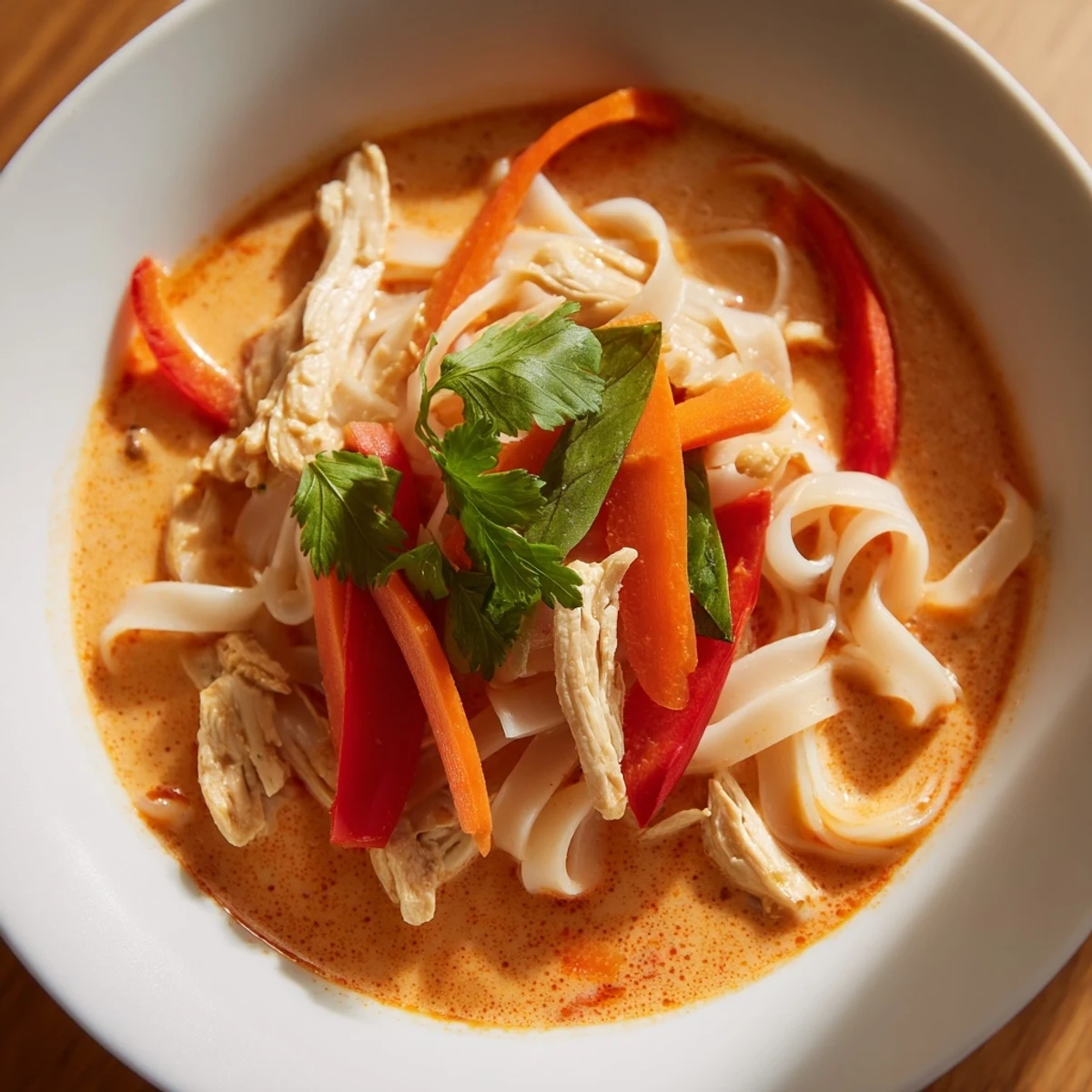
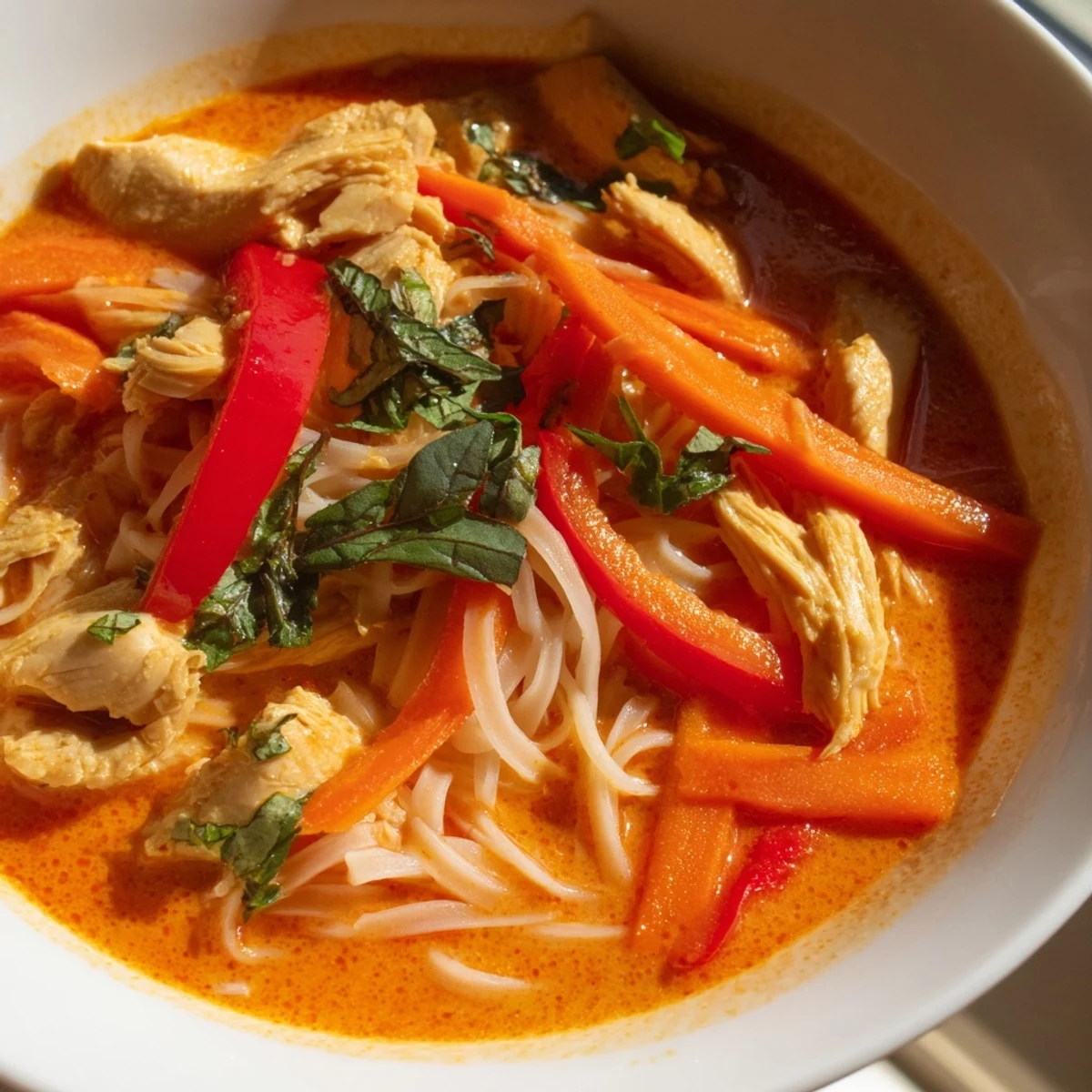
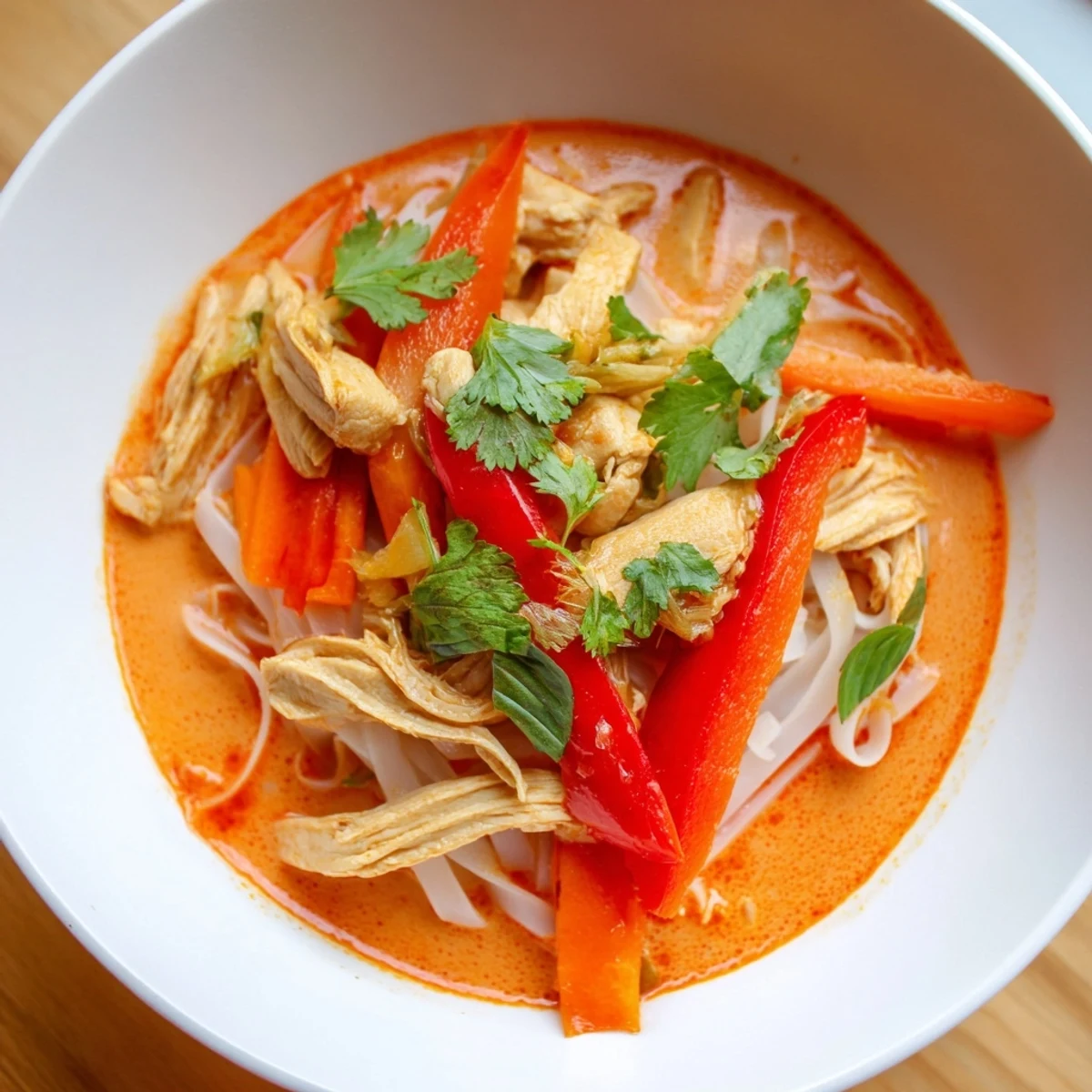
 This dish highlights tender chicken slices and crisp vegetables simmered in a creamy, spicy Thai red curry broth. Rice noodles soak up the flavorful blend, enhanced by aromatic garlic, ginger, and herbs like cilantro and Thai basil. The dish balances heat and creaminess with hints of lime and a touch of sweetness from brown sugar, creating a comforting yet vibrant meal ideal for any occasion.
There's something about the smell of Thai red curry paste hitting hot oil that stops me mid-thought every time—suddenly I'm not just cooking, I'm transported. One evening, a friend showed up unannounced with a craving she couldn't quite name, and I found myself pulling together this noodle soup from what I had on hand. By the time we sat down with steaming bowls, she was already reaching for a second helping, and I realized I'd stumbled onto something that feels both special and effortlessly simple.
I made this for my partner on a particularly exhausting Tuesday, and watching them take that first spoonful—eyes closing, shoulders relaxing—reminded me why cooking for someone matters. The curry paste, coconut milk, and lime juice create this perfect balance of creamy, spicy, and bright that feels almost therapeutic to eat.
Ingredients
- Chicken breast or thighs: Sliced thin so they cook quickly and absorb the broth; thighs stay more forgiving if you're not watching the clock obsessively.
- Dried rice noodles: Medium-width ones have the best texture—they hold up without getting mushy, and soaking them separately keeps you in control.
- Red bell pepper: Sliced thin enough to warm through without losing its crunch, adding sweetness that balances the heat.
- Carrot: Julienned fine so it cooks in the same 5 minutes as everything else, staying tender but still snappy.
- Sugar snap peas: These are non-negotiable for me; they add a fresh pop that cuts through the richness of coconut milk.
- Onion: Thinly sliced and cooked first to build the flavor base—this is where the soup starts to smell amazing.
- Thai red curry paste: This is the soul of the dish; don't skimp on quality, and bloom it in oil for a full minute so it releases all its hidden depths.
- Garlic and ginger: Minced fresh, added early—they perfume the oil and set the tone for everything that follows.
- Coconut milk: Full fat, always; it creates the silky broth that makes this feel indulgent without any dairy.
- Chicken stock: Use a good quality one if you can; it's the foundation, and mediocre stock makes mediocre soup.
- Fish sauce: A tablespoon seems small, but it amplifies every other flavor without announcing itself.
- Soy sauce: Adds salt and depth; use gluten-free if that matters to you.
- Brown sugar: Just enough to round out the spice and balance the salt.
- Lime juice: Added at the end to brighten everything; don't skip this step or the soup tastes flat.
- Fresh cilantro and Thai basil: These are the flourish that transforms a bowl of soup into something memorable, so use them generously.
- Red chili: Optional but recommended if you want that final kick and visual pop.
Instructions
- Soak your noodles while you prep:
- Pour hot water over the rice noodles and let them sit according to package directions—usually 8-10 minutes for dried noodles. This way they'll be ready exactly when you need them, and you avoid the chaos of trying to cook them in the pot.
- Build the flavor base:
- Heat oil in your pot over medium heat and add the onion, garlic, and ginger; let them sizzle and soften for 2-3 minutes until your kitchen smells undeniably good. This is the groundwork, and it matters.
- Awaken the curry paste:
- Stir in the red curry paste and let it cook for a full minute in the oil, stirring constantly. You'll notice it darkens slightly and smells more aromatic—that's when you know it's working.
- Start the chicken:
- Add your sliced chicken and cook for 2-3 minutes, stirring occasionally, until the edges turn opaque and it's no longer raw-looking. Don't worry about cooking it through yet; the broth will finish that job.
- Add your liquid and seasonings:
- Pour in the coconut milk and chicken stock, stirring well so the curry paste dissolves evenly. Add the fish sauce, soy sauce, and brown sugar, then bring everything to a gentle boil before lowering the heat to a simmer.
- Let it simmer:
- Keep it bubbling softly for about 10 minutes so the flavors meld and deepen. This is your moment to finish prepping the vegetables if you haven't already, or to just pause and appreciate what's happening in the pot.
- Add the vegetables:
- Toss in the bell pepper, carrot, and sugar snap peas, and simmer for 5 minutes until they're tender but still have character. The chicken will be fully cooked through by this point too.
- Bring in the noodles:
- Drain your soaked noodles, add them to the pot, and stir gently for about 2 minutes until they're warmed through and mingling with everything else. Don't let them sit around after this step or they'll start getting soft.
- Finish with brightness:
- Remove the pot from heat and squeeze in the lime juice, stirring once to combine. Taste and adjust the seasoning if you need to—a pinch more lime, salt, or fish sauce can make all the difference.
- Serve immediately:
- Ladle into bowls and crown each one with cilantro, Thai basil, a few chili slices if you're feeling it, and a lime wedge on the side. Serve right away so the noodles stay at their best.
 Pin It
 I think of this as the kind of soup that brings people together without fuss—no complicated techniques, no pretension, just good instincts and honest flavors. It's the dish I return to when I want to feel like I've cooked something worthwhile without spending the whole evening in the kitchen.
Why This Recipe Works
The magic here is in the balance and the technique, not complicated ingredients. Blooming the curry paste in hot oil draws out its complex spice and aroma, while the coconut milk tempers the heat without making it creamy in an heavy way. The vegetables add texture and freshness, the lime brightens everything at the end, and the noodles soak up all that flavorful broth so every bite tastes complete. It's a formula that works because each element has a job and does it well.
Timing and Flexibility
The beauty of this soup is that you can have it on the table in under an hour, but it also scales beautifully. You can double it for a crowd or make it in single servings; you can use whatever vegetables look good at the market; you can adjust the spice level by adding more or less curry paste. I've made versions with shrimp instead of chicken, added mushrooms for earthiness, or swapped in tofu when I was cooking for vegetarian friends. The core technique stays the same, and it always tastes like you knew what you were doing.
Storage and Make-Ahead Tips
The broth keeps beautifully in the refrigerator for up to three days, and honestly tastes even better the next day as the flavors settle and deepen. Store it without the noodles so they don't get waterlogged, and reheat gently over medium heat. When you're ready to serve, soak fresh noodles or reheat pre-cooked ones separately, then divide them into bowls and ladle the warm broth over top. This way you're eating fresh noodles every time, which makes all the difference.
- Make the broth ahead and store it separately from the noodles for maximum texture and freshness.
- Prep your vegetables the night before, but don't slice the avocado or add fresh herbs until you're ready to eat.
- If you're short on time, use pre-cooked rice noodles and just warm them through in the broth at the very end.
 Pin It
 This soup has become my answer to the question what should I cook when I want something that feels special but doesn't require elaborate planning. Make it once and you'll understand why.
Recipe Q&A
- → What noodles work best for this dish?
-
Medium-width dried rice noodles are ideal, soaking briefly in hot water until just tender to maintain texture.
- → Can the chicken be substituted?
-
Yes, tofu or other proteins can be used. For vegetarian versions, replace chicken stock with vegetable stock and omit fish sauce.
- → How spicy is the curry base?
-
The red curry paste provides medium spice; adjust the quantity to suit preferred heat levels.
- → What herbs garnish the dish?
-
Fresh cilantro, Thai basil, and optional sliced red chili add aroma and a herbal note to the dish.
- → Are there common allergens to be aware of?
-
This dish contains soy and fish from the sauces; gluten may be present depending on soy sauce choice. Check curry paste for shellfish ingredients.
- → How should the vegetables be prepared?
-
Vegetables like bell pepper, carrot, snap peas, and onion are thinly sliced or julienned for quick cooking and a crisp texture.