
 Pin It
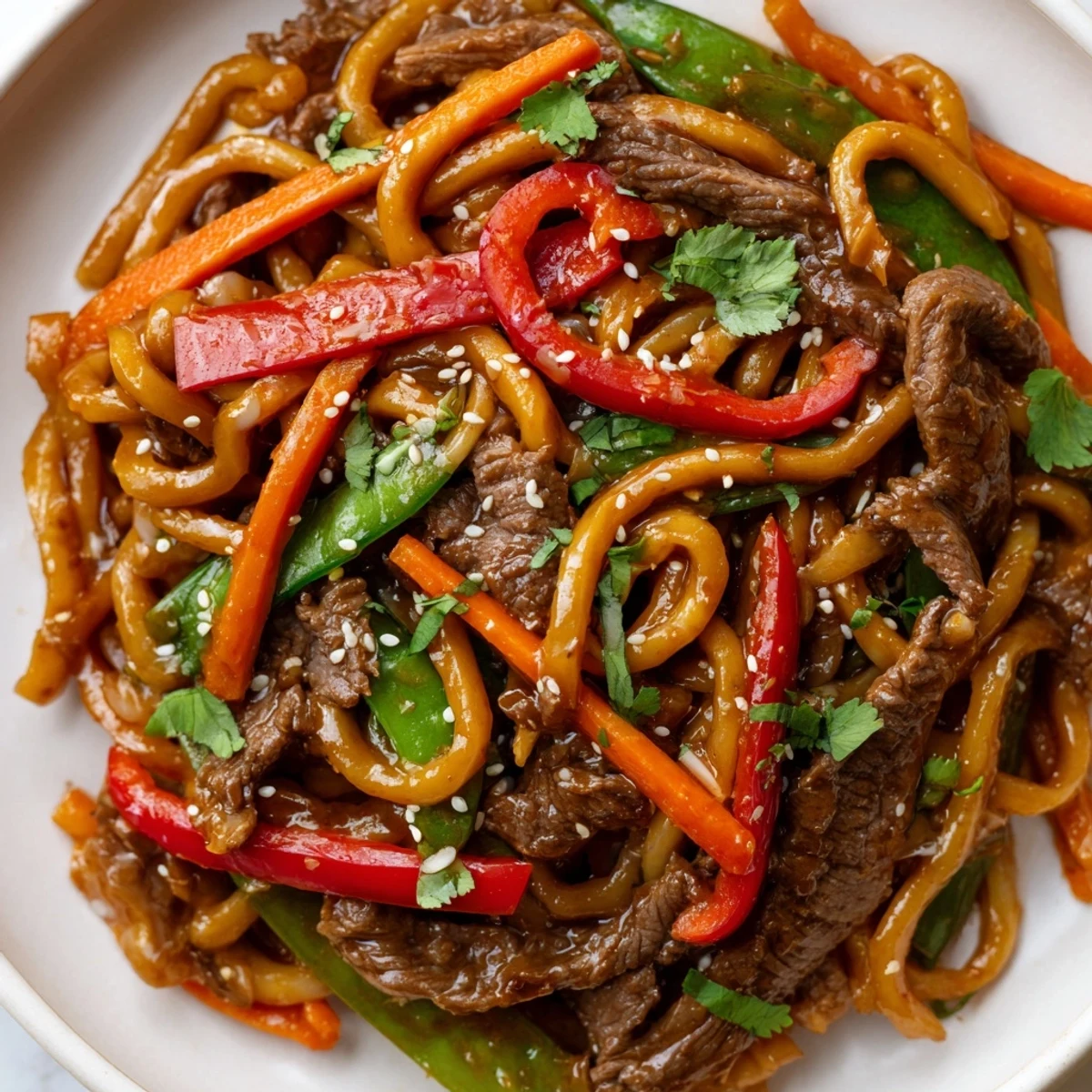
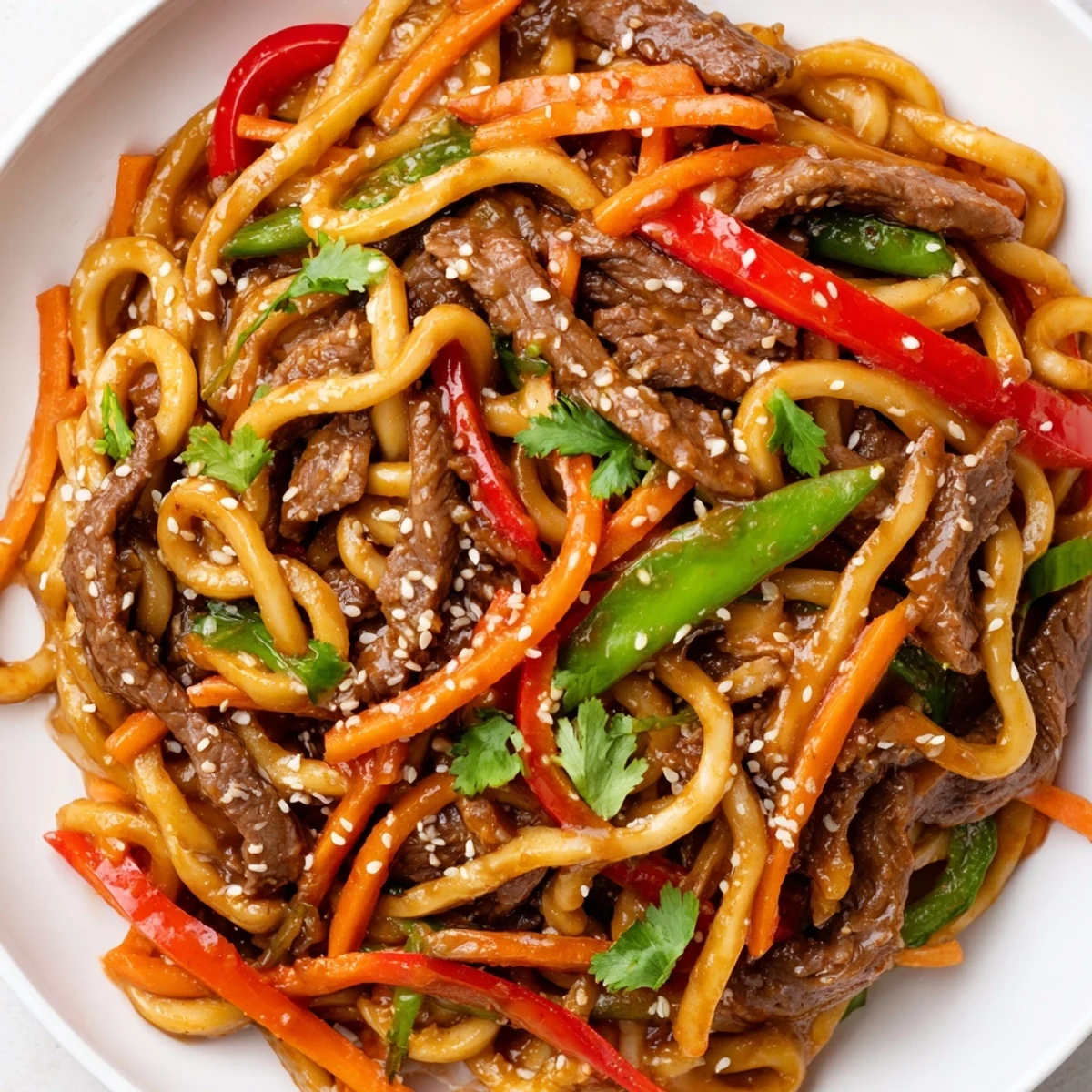
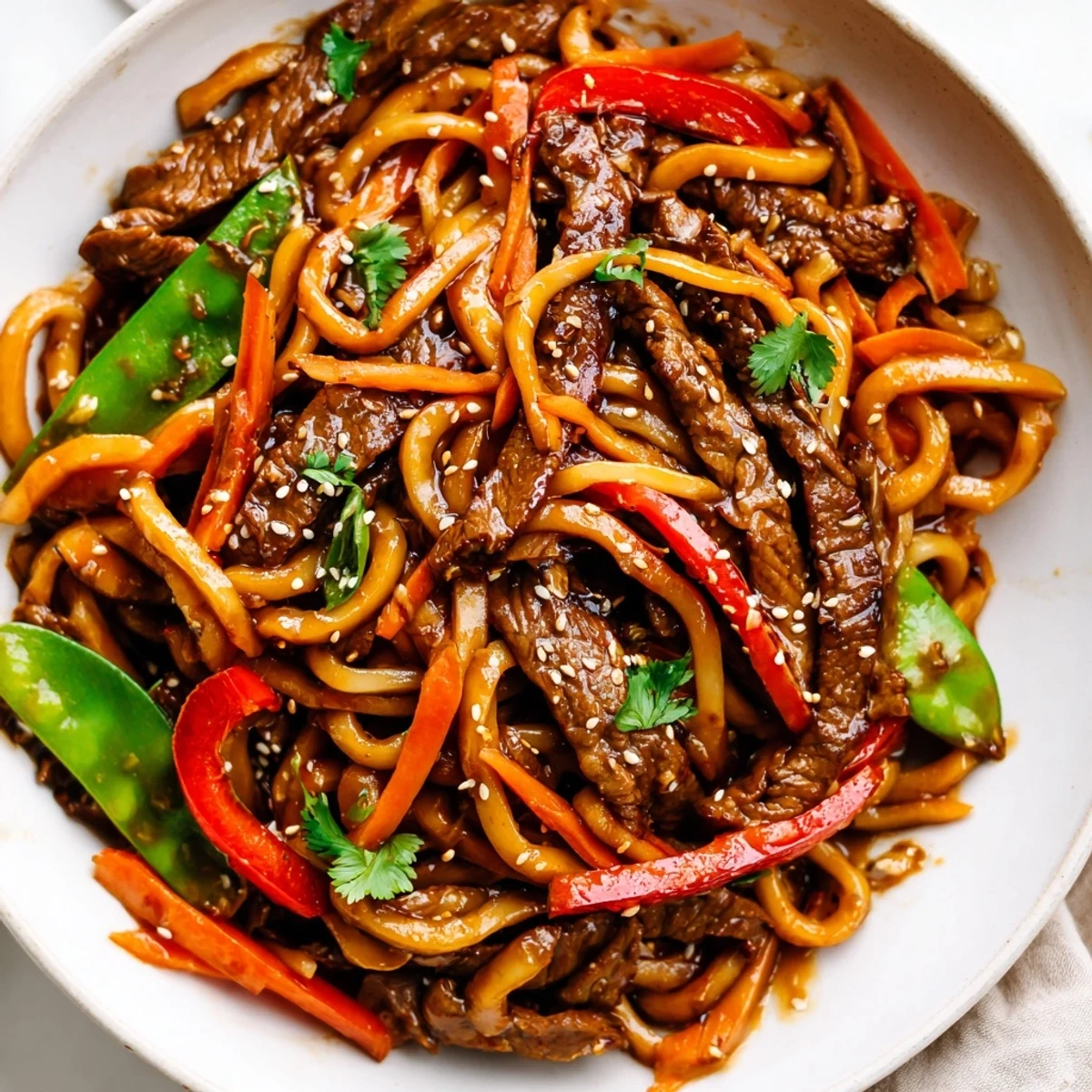
 This dish combines tender strips of beef with crisp red bell pepper, snap peas, and julienned carrot, all stir fried with aromatic garlic and ginger. Fresh udon noodles bring chewy texture, while a spicy, savory sauce made from soy, oyster, chili garlic sauce, and toasted sesame oil ties the flavors together. Garnished with green onions, sesame seeds, and fresh cilantro, it offers a balanced meal with bold Asian-inspired flavors ready in just over half an hour.
There's a particular Tuesday night I can't forget—the one where my wok nearly tipped over because I got too enthusiastic tossing beef with one hand while holding my phone in the other. My neighbor's dinner had fallen through, so I threw together this spicy udon situation with whatever I had, and something about the sizzle of hot oil meeting cold noodles just clicked. Now it's the dish I make when I need to feel like I've got things under control, even if I don't.
I made this for my book club once, and someone asked if I'd ordered it from that place downtown—the one that always has a line out the door. Watching their face when I said I'd made it in my regular kitchen with a regular skillet felt like the smallest kind of victory. It's become my secret weapon for looking like I know what I'm doing.
Ingredients
- Flank steak, thinly sliced: The grain matters more than you'd think; slice against it and the beef stays tender even with high heat. 400 g gives you enough presence without overwhelming the noodles.
- Soy sauce: You'll use it twice—once for the marinade to season the beef, once in the sauce. Don't skip the marinade step; those 10 minutes make a real difference.
- Cornstarch: This tiny addition to the beef marinade is the secret to that restaurant-style silky texture. It creates a barrier that keeps the meat from getting tough.
- Fresh or vacuum-packed udon noodles: The chewiness is what sets this apart from regular noodles. Fresh ones cook faster and have better texture, but vacuum-packed works beautifully too.
- Red bell pepper and snap peas: Their sweetness cuts through the heat and salt, keeping the dish balanced. The snap peas especially add a little textural surprise.
- Carrot, julienned: It softens just enough to be pleasant without turning mushy if you keep the heat high and the timing tight.
- Spring onions: Split them into white and green parts; the whites go in early for aromatics, the greens finish the dish with a fresh bite.
- Chili garlic sauce or Sriracha: This is where your heat comes from. Sriracha is more predictable, but chili garlic sauce adds a slight rougher edge that feels more authentic.
- Sesame oil: Use the toasted kind for the sauce; it's got a deeper, nuttier flavor that matters. The regular sesame oil in the beef marinade prevents sticking.
- Garlic and ginger: Mince the garlic small and grate the ginger so they release their flavor quickly into the oil. Thirty seconds over high heat is all they need.
- Sesame seeds and cilantro: These are your finishing touches—they look intentional and add brightness that makes people think you've really planned this meal.
Instructions
- Marinate the beef:
- Toss your sliced steak with soy sauce, cornstarch, and sesame oil, then let it sit. This is the easiest 10 minutes you'll spend, and it's the difference between tender beef and beef that's just... there.
- Cook the noodles:
- Get these going while the beef rests. Drain them well so they don't make your final stir fry watery and sad.
- Mix the sauce:
- Whisk everything together in a small bowl so you're not fumbling with bottles over a screaming hot pan. You want salty, spicy, a little sweet, a little tangy—all in one pour.
- Sear the beef:
- Heat your wok or skillet until it's seriously hot, then add beef in a single layer. Don't move it around for the first minute or so; let it get a golden edge before you start tossing. Remove it and set aside—it'll finish cooking later.
- Build the aromatics:
- Add a little more oil if the pan looks dry, then toss in garlic, ginger, and the white parts of spring onions. The smell should be immediate and make you realize this is going to be good.
- Stir fry the vegetables:
- Throw in your peppers, snap peas, and carrots. Keep the heat high and keep moving them around for 2–3 minutes. They should be bright and crisp, not soft.
- Bring it together:
- Return the beef to the pan along with your cooked noodles and the sauce. Toss everything for 2–3 minutes so the noodles absorb some of that flavor and the beef finishes cooking through. You're looking for everything to be hot, glossy, and evenly coated.
- Plate and garnish:
- Green onions, sesame seeds, cilantro if you have it—these finishing touches make it look like you actually have a handle on things. Serve immediately while the noodles are still chewy.
 Pin It
 I think about that moment when everything hits the pan at once—the sizzle, the smell, that split second where you're not sure if you've timed it right. And then somehow it always works out, and you're standing there with a wok full of something that tastes like you've been doing this for years. That's when I remember why I love cooking.
The Heat Factor
Spicy doesn't have to mean painful. The chili garlic sauce in this recipe builds heat gradually rather than hitting you all at once, and the sweetness of the brown sugar and the richness of sesame oil round everything out. If you find yourself wincing, add a splash of rice vinegar to cool things down slightly, or just dial back the sauce next time. I've learned that the best version of this dish is the one that makes you happy, not the one that makes you cry.
Why Udon, Why Now
Udon noodles have this almost ridiculous chewiness that regular pasta or ramen just can't match. They hold up to aggressive tossing and high heat without falling apart, which means you can actually stir fry them with confidence instead of babying them. The first time I used them was honestly an accident—I grabbed the wrong package at the store—but they became non-negotiable.
Making It Your Own
This recipe is sturdy enough to handle your preferences and whatever vegetables you've got on hand. Swap the beef for chicken, shrimp, or tofu depending on what's calling to you that day. Use broccoli, mushrooms, or bok choy instead of snap peas. The structure stays the same, but the dish becomes yours.
- If you're feeding someone without dairy concerns, drizzle a tiny bit of sesame oil over the top just before serving for extra richness.
- Add a squeeze of lime juice if you want brightness, or a splash of rice vinegar if you need the heat toned down.
- Fresh chilies sliced thin work beautifully if you want visible heat and extra crunch alongside the sauce.
 Pin It
 This is the kind of meal that fills your kitchen with steam and noise and life, then vanishes from the plates faster than you'd expect. Make it, and let someone you care about taste it.
Recipe Q&A
- → What cut of beef works best?
-
Flank steak sliced thinly against the grain ensures tenderness and quick cooking.
- → Can I use other noodles?
-
Yes, substitute udon with rice noodles or lo mein for different textures.
- → How to adjust spice levels?
-
Add fresh chilies or increase chili garlic sauce to suit your desired heat.
- → What vegetables can I swap in?
-
Broccoli, mushrooms, or bok choy work well as quick-cooking alternatives.
- → Any tips for perfect stir frying?
-
Use a hot wok, cook ingredients in batches if needed, and avoid overcrowding for even searing.