 Pin It
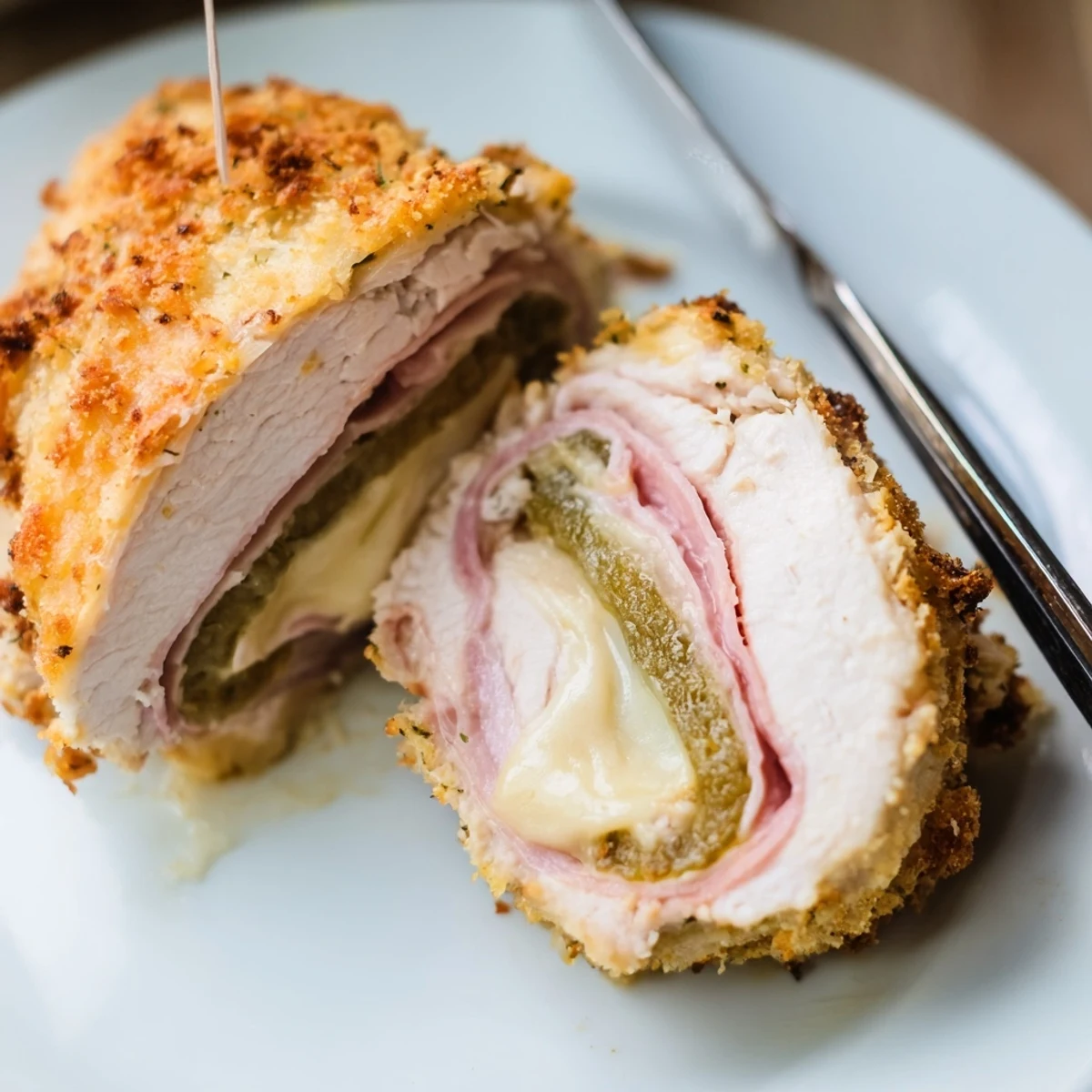
 Brine chicken breasts in dill pickle juice for at least an hour, then pound thin, layer with cheese and optional ham, and roll tightly. Dredge in flour, egg wash, and seasoned panko, then bake at 400°F (200°C) for 25–30 minutes until golden and 165°F inside. Rest briefly, slice, and serve with a creamy mustard sauce or extra pickles for contrast. Broil 2–3 minutes for extra crunch and keep seams down while baking to retain juices.
The smell of pickle juice hit me the wrong way when my cousin suggested brining chicken in it at a summer cookout three years ago. I was skeptical right up until I tasted the result: impossibly juicy meat with a tangy undertone that hooked me instantly. Now these crispy rolls show up at nearly every gathering I host, and nobody guesses the secret ingredient until I tell them. They always ask for the recipe afterward.
I made a double batch of these for a friends football watch party last winter and they disappeared before halftime. My buddy Dave stood by the tray eating them like chips, completely ignoring the wings Id spent twice as long smoking.
Ingredients
- Dill pickle juice: Use the leftover juice from a jar of good quality dill pickles, not the sweet kind.
- Garlic powder and onion powder: These deepen the savory flavor of the brine without overpowering the pickle tang.
- Boneless, skinless chicken breasts: Pound them evenly so they roll up without tearing and cook uniformly.
- Swiss or provolone cheese slices: Provolone melts more smoothly, but Swiss adds a lovely nutty note.
- Smoked ham slices (optional): They add a salty, smoky layer that pairs perfectly with the tangy brine.
- All-purpose flour: The first coat in the breading station gives the egg something to cling to.
- Large eggs and milk: The egg wash is the glue that holds the crispy panko crust in place.
- Panko breadcrumbs: These create a lighter, crunchier coating than regular breadcrumbs ever could.
- Paprika and dried dill: A pinch of each in the breadcrumbs boosts color and complements the pickle flavor beautifully.
- Cooking spray or vegetable oil: A light coating on top ensures the crust browns evenly in the oven.
Instructions
- Pound and brine the chicken:
- Slide each breast between plastic wrap and gently pound to a quarter inch thickness, then tuck them into a bag with the pickle juice, garlic powder, and onion powder. Let them soak in the fridge for at least an hour, though overnight makes the flavor really sing.
- Heat the oven:
- Crank it to 400 degrees Fahrenheit and line a baking sheet with parchment paper sprayed lightly with cooking spray so nothing sticks.
- Roll them up:
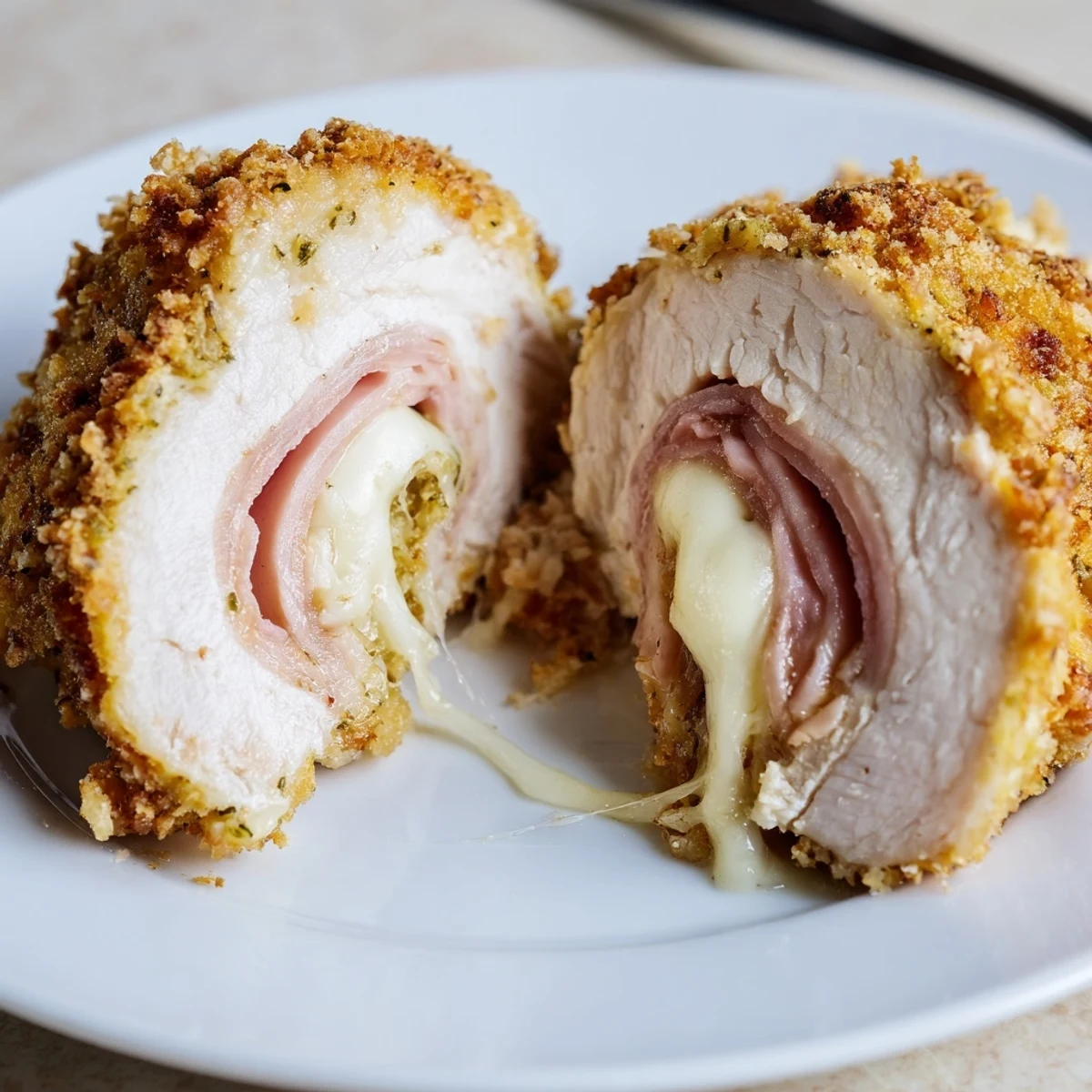
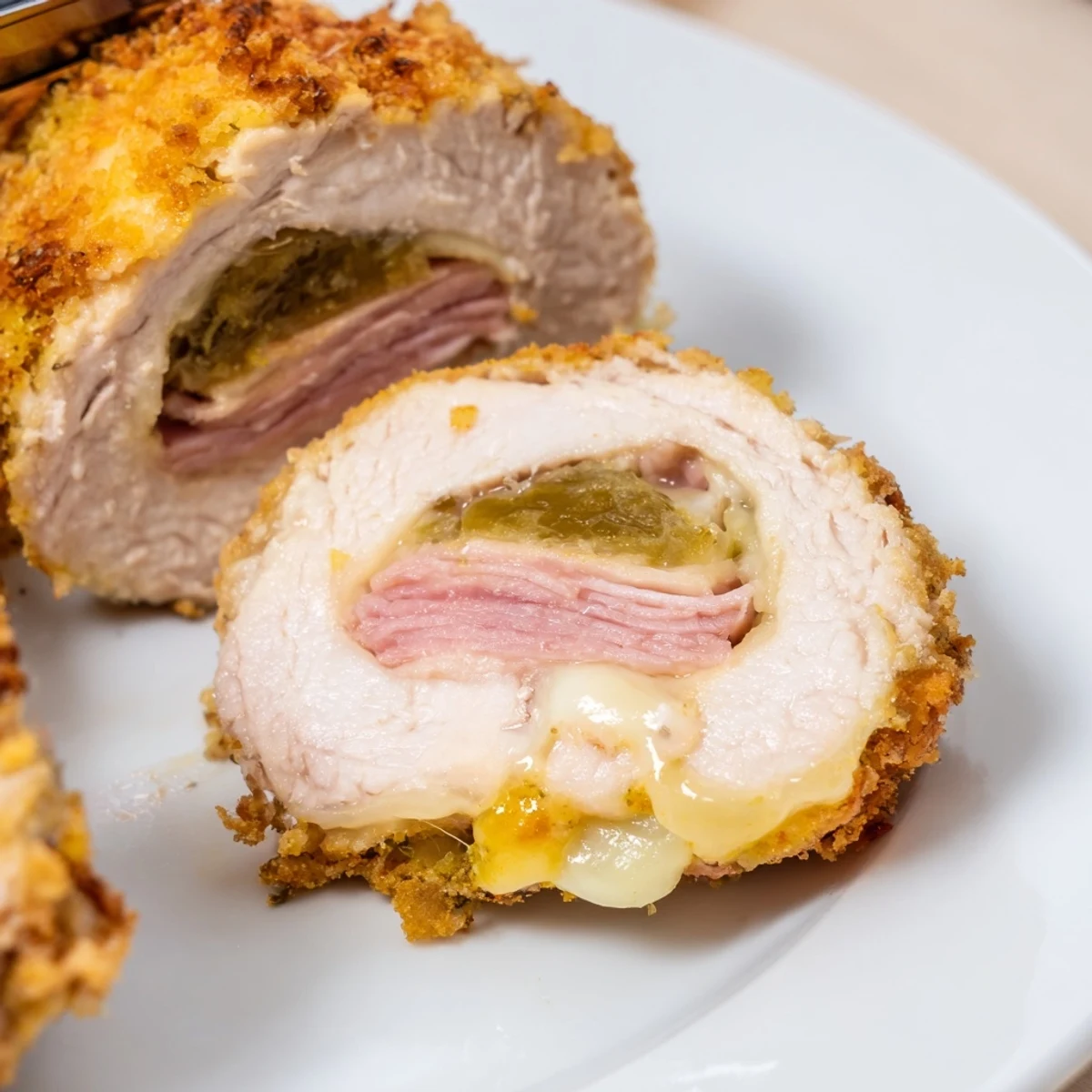
- Pull the chicken from the brine and pat it dry with paper towels, then season with salt and pepper. Lay a slice of cheese and ham on each piece, roll tightly, and lock them shut with toothpicks.
- Set up the breading station:
- Line up three shallow bowls with flour, beaten egg mixed with milk, and panko combined with paprika and dill. Roll each chicken log through flour first, then egg, then press firmly into the panko mixture until fully coated.
- Bake until golden:
- Arrange the rolls on the prepared sheet and give the tops a quick spray of oil. Bake for 25 to 30 minutes until the crust is deeply golden and the internal temperature reads 165 degrees Fahrenheit.
- Rest and serve:
- Let them sit for about five minutes so the cheese settles, then pull out the toothpicks, slice into pinwheels, and serve while they are piping hot.
 Pin It
 The first time I served these to my mother in law, she assumed I had ordered them from a restaurant and was genuinely stunned when I described the pickle juice brine.
What to Serve Alongside
A creamy mustard dipping sauce is my go-to pairing, though a simple ranch or even extra pickle spears on the plate work just as well. A crisp side salad or some roasted potatoes round out the meal without competing with all that crunch.
Making Ahead and Storing
You can brine the chicken overnight and assemble the rolls up to the breading stage, then refrigerate them covered for a few hours before baking. Leftover slices reheat surprisingly well in a 375 degree Fahrenheit oven for about ten minutes, though the microwave will soften the crust.
Getting the Crunch Just Right
The broiler trick changed everything for me after months of rolls that looked pale despite being fully cooked. A few extra minutes of direct heat transforms the surface into something that crackles when you bite into it.
- Press the panko onto the chicken firmly, do not just sprinkle and hope.
- Make sure the oven is fully preheated before the rolls go in.
- Spray the tops generously because dry panko spots will not brown properly.
 Pin It
 Every time I make these I think about that cookout and how close I came to never trying them at all. Sometimes the best recipes come from the ideas that sound completely ridiculous at first.
Recipe Q&A
- → How long should I brine the chicken?
-
Brine breasts for at least 1 hour for noticeable tang and moisture; you can brine up to overnight for deeper flavor, but avoid much longer to prevent overly salty meat.
- → Can I use turkey instead of chicken?
-
Yes. Turkey breasts can be used; adjust pounding and cooking time—thinner turkey slices may finish more quickly, so check internal temperature.
- → How do I keep the rolls juicy?
-
Pound the breasts evenly to thin them, don’t over-brine, secure rolls tightly, and rest the cooked rolls 5 minutes before slicing to let juices redistribute.
- → What can I use instead of panko?
-
For a different texture, use crushed cornflakes, fine breadcrumbs, or a mix of crushed pretzels; panko gives the lightest, crispiest crust.
- → Should I pan-fry or bake the rolls?
-
Baking at 400°F gives an easy, evenly cooked result with less oil; pan-frying yields extra browning but may require finishing in the oven to reach 165°F through the center.
- → How do I ensure fillings stay inside?
-
Tuck the cheese and ham near the edge, roll tightly, and secure with toothpicks or kitchen twine. Place rolls seam-side down on the baking sheet to help them hold shape.