
 Pin It
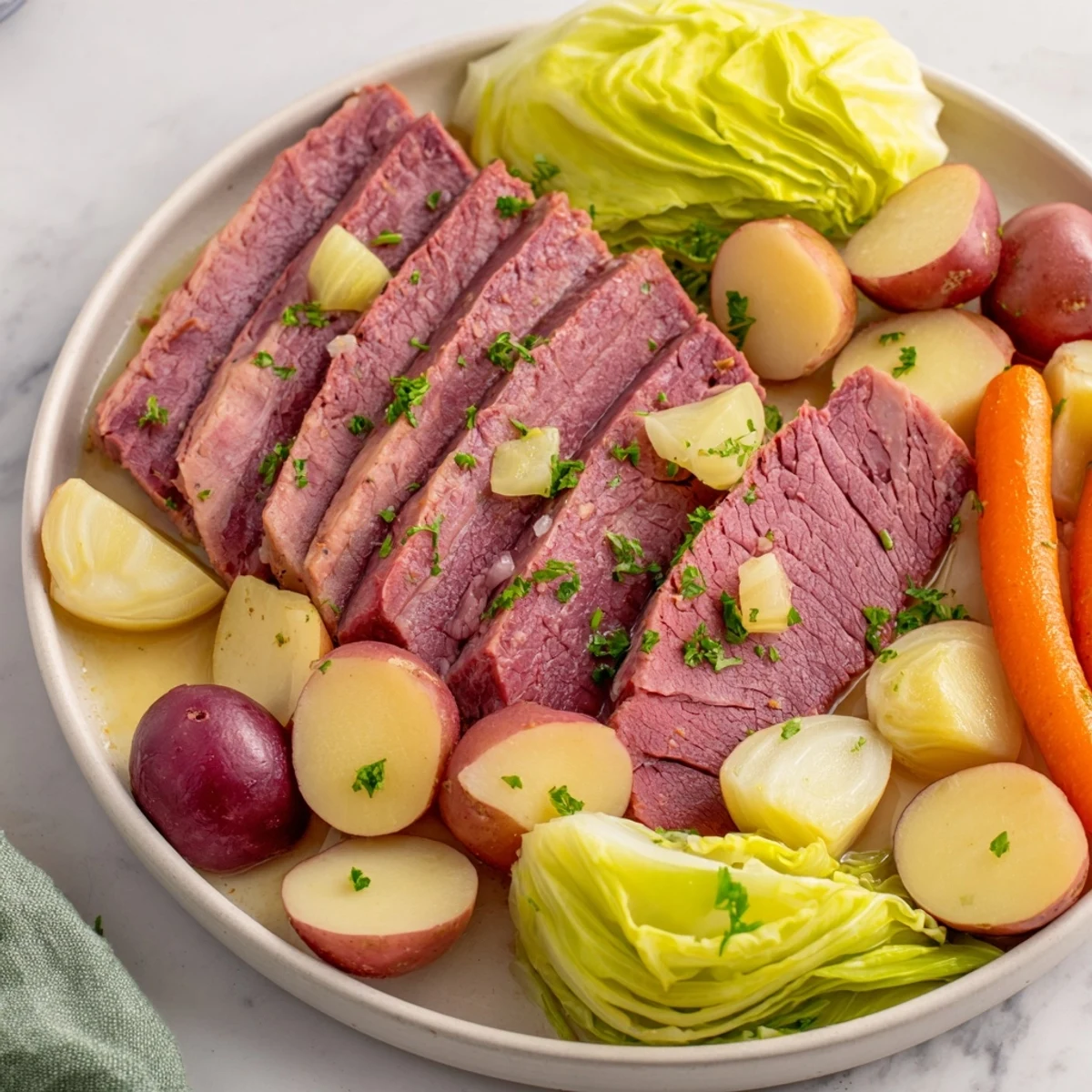
 This dish features tender corned beef brisket simmered slowly with red potatoes, carrots, onions, celery, and cabbage. Aromatic spices like bay leaves, black peppercorns, and garlic infuse the broth, enhancing flavors as the beef becomes fork-tender over several hours. Finished with optional butter and fresh parsley, it offers a hearty, comforting meal ideal for family dinners. The method involves gentle simmering in beef broth and water to meld ingredients perfectly while preserving textures.
The first time I made corned beef pot roast, my tiny apartment smelled like a bustling Irish deli for three solid days. My neighbor actually knocked on my door to ask what I was cooking, and we ended up sharing dinner at my makeshift kitchen table. Now every time I those aromatic spices hit the simmering broth, I remember how food can turn strangers into friends over something as simple as a perfectly cooked piece of beef.
Last winter my sister came over feeling completely defeated by a terrible week at work. I put this pot roast on in the afternoon, and by dinner time she was sitting on my kitchen counter, watching the vegetables bubble away, actually smiling again. Sometimes the best therapy is a house that smells like comfort and a plate thats been waiting for you all day.
Ingredients
- 3 lbs corned beef brisket with spice packet: The spice packet is pure gold, do not toss it
- 1 lb small red potatoes halved: They hold their shape better than russets and look beautiful on the platter
- 4 large carrots cut into 2 inch pieces: Cut them larger than you think, they shrink considerably
- 1 large yellow onion quartered: Red onion works too but yellow becomes sweeter as it cooks
- 1 small head green cabbage in wedges: Keep the core attached so each wedge stays intact during simmering
- 3 celery stalks cut into pieces: Often overlooked but adds essential depth to the broth
- 4 cups low sodium beef broth: Low sodium is crucial since the beef is already cured
- 2 cups water: Helps balance the saltiness without diluting flavor
- 2 bay leaves: Remove them before serving, nobody wants a surprise bay leaf bite
- 6 whole black peppercorns: They add subtle warmth without being spicy
- 4 garlic cloves smashed: Smashed releases more flavor than minced here
- 2 tbsp unsalted butter for finishing: Completely optional but adds restaurant quality sheen
- 2 tbsp chopped fresh parsley: Makes everything look intentional and photographed
Instructions
- Rinse and position the beef:
- Give that corned beef a thorough cold water rinse to shake off the excess brine, then nestle it into your largest Dutch oven or heavy bottomed pot.
- Build the simmering liquid:
- Pour in the beef broth, water, that precious spice packet, bay leaves, peppercorns, and smashed garlic around the meat, then bring everything to a gentle bubble over medium high heat.
- Low and slow the beef:
- Cover the pot tightly, turn the heat down to the lowest setting, and let it simmer peacefully for 2 hours while your kitchen transforms into the coziest place in the house.
- Add the hearty vegetables:
- Toss in the potatoes, carrots, onion quarters, and celery, re cover, and continue the simmer for another 45 minutes until the vegetables are starting to soften.
- Introduce the cabbage:
- Gently lay in the cabbage wedges, cover again, and cook for 30 more minutes until everything is fork tender and the house smells absolutely incredible.
- Rest and slice properly:
- Lift out the beef and let it rest on a cutting board for 10 minutes before slicing against the grain, which is the secret to tender pieces instead of chewy shreds.
- Present and finish:
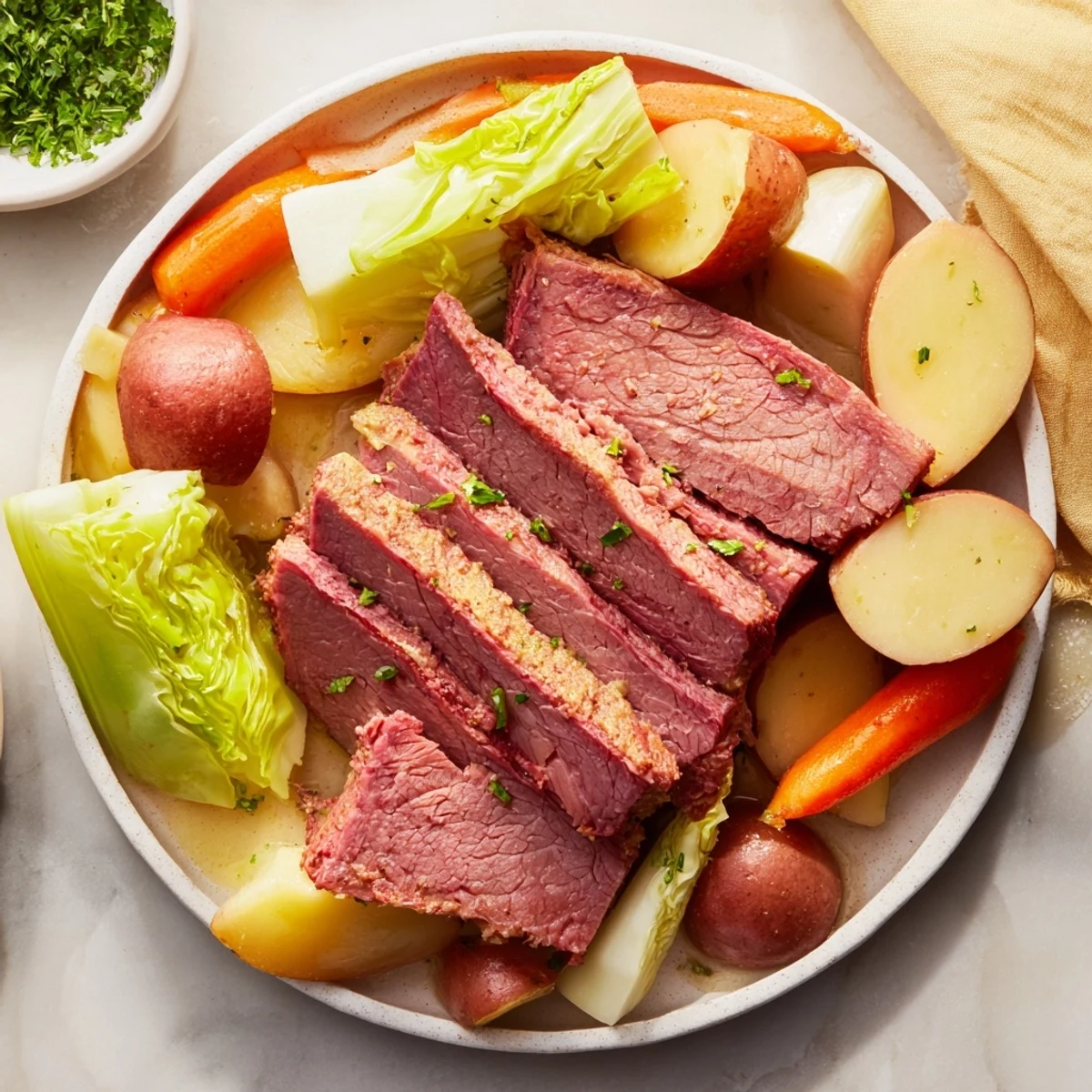
- Arrange the sliced beef and vegetables on a large platter, drizzle with melted butter if you are feeling fancy, sprinkle with fresh parsley, and serve hot with some of that flavorful broth alongside.
 Pin It
 My dad always served corned beef with a side of horseradish so strong it would clear your sinuses for a week, and now I cannot eat it any other way. It became our weird little tradition, and watching my kids try it for the first time is the highlight of every St. Patricks Day.
Building Better Flavor
Adding a splash of apple cider vinegar to the broth cuts through the richness and brightens every single bite. I discovered this by accident when I ran out of broth midway through cooking one Sunday, and now I do it on purpose every single time.
Making It Ahead
This pot roast actually tastes better the next day when all the flavors have had time to really know each other in the refrigerator. I often make it on Sunday and simply reheat gently on Monday for an effortless dinner that tastes like I spent all day cooking.
Leftover Magic
The possibilities for leftovers are almost better than the original meal. Thin slices make incredible sandwiches on rye bread with mustard, or chop everything up for the most satisfying hash you will ever eat for breakfast.
- Store leftovers in the broth to keep everything incredibly moist
- Freeze portions in freezer bags for up to three months
- The broth makes an exceptional soup base on its own
 Pin It
 There is something deeply satisfying about a meal that requires so little active work but delivers such enormous comfort. Pot roast is the original set it and forget it dinner, and it deserves to be in your regular rotation.
Recipe Q&A
- → How long should the corned beef be cooked?
-
Simmer the corned beef gently for about 2 hours before adding vegetables, then continue cooking until fork-tender, totaling around 3 to 3.5 hours.
- → Can I use different vegetables in this dish?
-
Yes, while classic root vegetables like potatoes, carrots, and cabbage are traditional, you can substitute or add others like parsnips or turnips to suit your taste.
- → What is the best way to slice the cooked beef?
-
Let the cooked beef rest for 10 minutes, then slice it against the grain to ensure tenderness.
- → How can the flavor be enhanced further?
-
For extra depth, add a splash of apple cider vinegar or a tablespoon of Dijon mustard to the cooking broth before simmering.
- → Is this dish suitable for gluten-free diets?
-
Yes, the ingredients here naturally avoid gluten, but always check the packaging on the beef and spice packet to confirm.
- → Can leftovers be repurposed?
-
Leftover meat and vegetables work well in sandwiches, hashes, or even as additions to stews for additional flavor.