
 Pin It
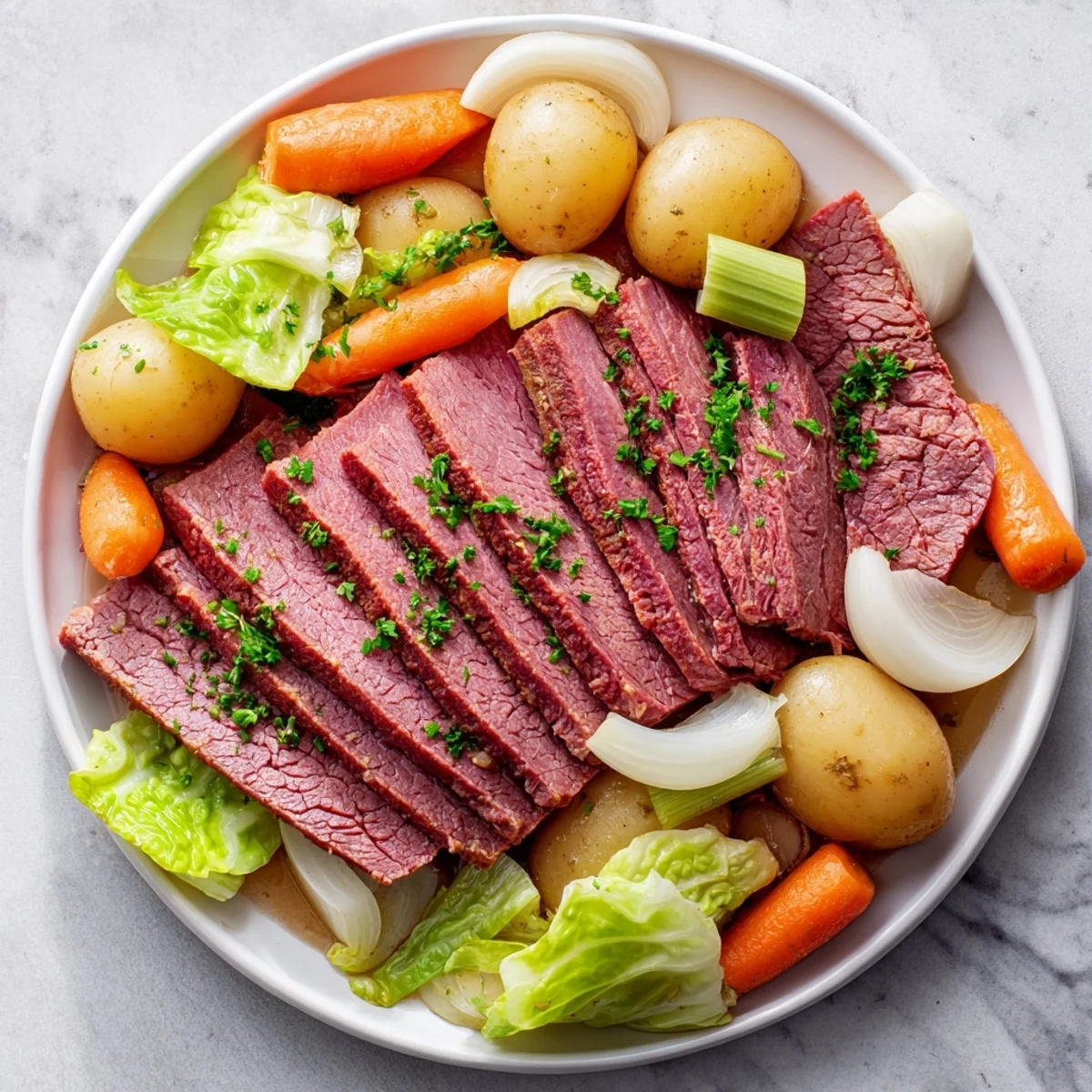
 This comforting dish features tender corned beef brisket slowly cooked with baby potatoes, carrots, celery, onions, and cabbage in a savory broth infused with bay leaves, black peppercorns, and garlic. The beef absorbs rich flavors while simmering low and slow, resulting in a juicy, flavorful cut that pairs perfectly with fresh parsley garnish and tangy mustard or horseradish. Ideal as a satisfying family meal, it accommodates gluten-free diets and lends itself well to leftover adaptations.
The smell of corned beef simmering away on a Sunday afternoon takes me back to my grandmother's tiny kitchen, where the windows would steam up and you could smell dinner from the sidewalk. I've made this pot roast countless times since then, but that first bite of tender beef with sweet cabbage still hits the same spot. Some recipes are just meant to be slow-cooked while you go about your day, checking in occasionally and letting the house fill with that incredible aroma.
I once made this for St. Patrick's Day when my apartment was barely big enough for the pot itself, and somehow six of us squeezed around a too-small table eating off mismatched plates. Nobody cared that we were cramped or that the cabbage was slightly overcooked because the beef was meltingly tender and the conversation kept flowing until midnight. That's the magic of a pot roast, it turns a regular dinner into something people remember.
Ingredients
- 3 lbs corned beef brisket with seasoning packet: Rinse it first to remove excess salt, and don't throw away that spice packet
- 4 cups low-sodium beef broth plus 2 cups water: The combo keeps it flavorful without being overwhelmingly salty
- 1.5 lbs baby potatoes halved: They hold their shape better than large cut potatoes and look beautiful on the platter
- 4 large carrots cut into chunks: 2-inch pieces won't turn to mush during the long cook time
- 1 large onion quartered: The layers fall apart naturally and sweeten the entire broth
- 1 small head green cabbage in wedges: Cut it through the core so each wedge stays intact while cooking
- 3 celery stalks: An underrated addition that adds depth to the broth
- 2 bay leaves, 6 peppercorns, 4 smashed garlic cloves: These aromatics build layers of flavor behind the scenes
Instructions
- Get the oven ready and position the beef:
- Preheat your oven to 325°F and place the corned beef fat-side up in a large Dutch oven. Sprinkle the seasoning packet evenly over the meat and tuck the bay leaves, peppercorns, and garlic around the edges.
- Add the liquid and bring it to temperature:
- Pour in the beef broth and water until the meat is almost completely submerged. Bring everything to a gentle simmer over medium heat on the stove.
- Start the long, slow cook:
- Cover the pot tightly and transfer it to the oven. Let the beef cook undisturbed for 2 hours while you go about your day.
- Add the first round of vegetables:
- Carefully remove the pot and tuck the potatoes, carrots, celery, and onion around the beef. The liquid should still mostly cover everything. Return it to the oven, covered, for another 45 minutes.
- Finish with the cabbage:
- Add the cabbage wedges on top, cover again, and cook for 30 to 40 more minutes. You'll know it's done when the beef is fork-tender and the vegetables easily yield to a knife.
- Rest the meat before serving:
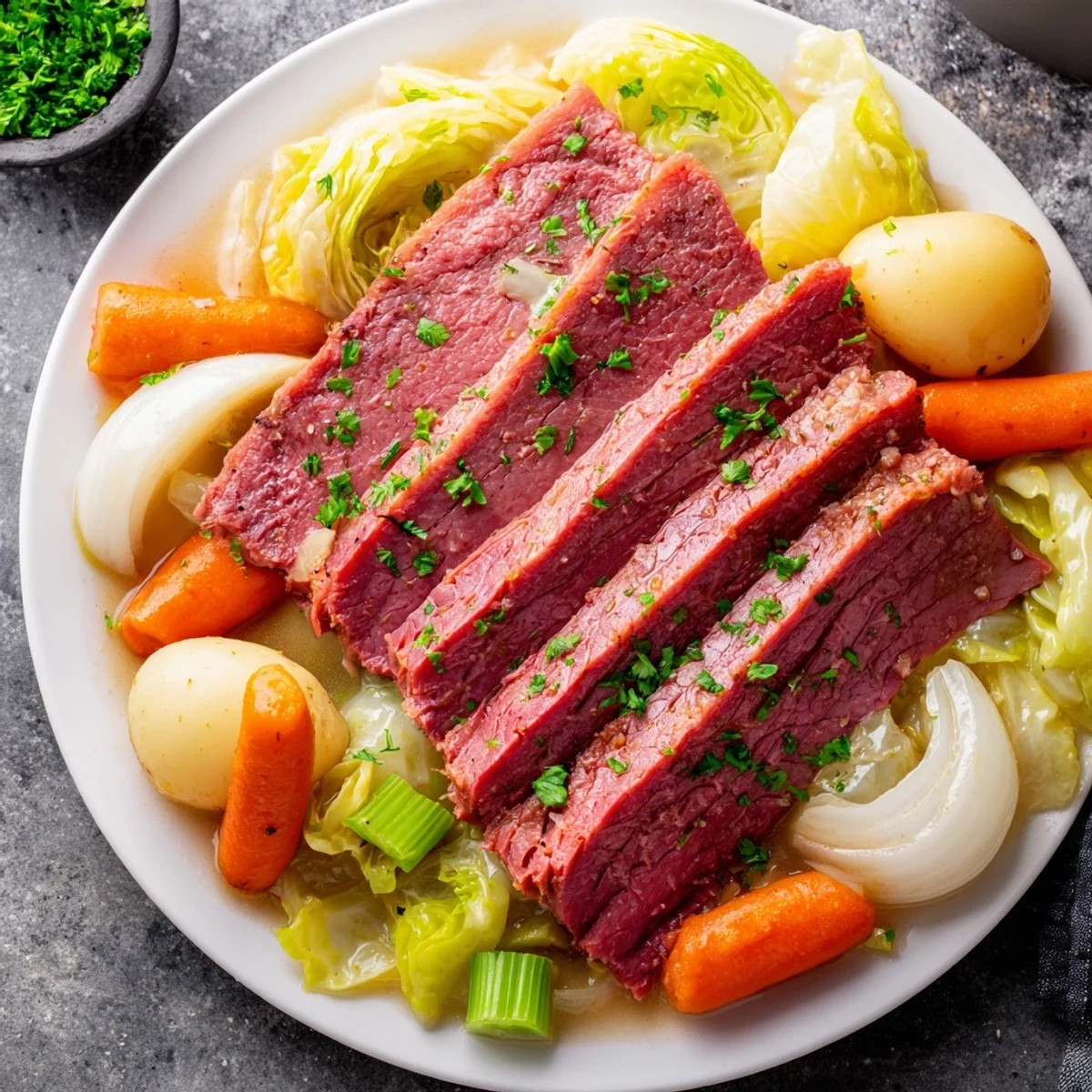
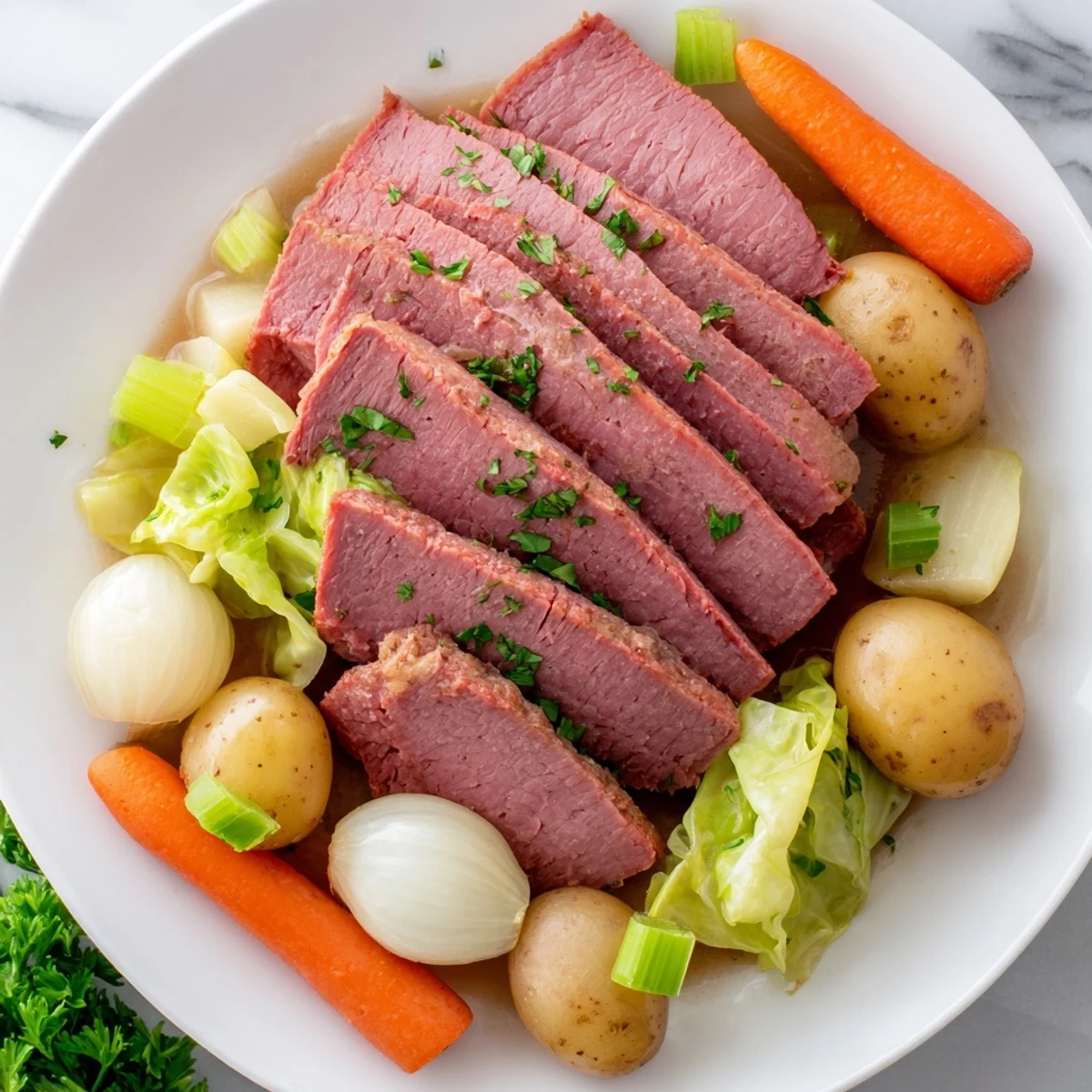
- Transfer the beef to a cutting board and let it rest for 10 minutes. Slice it against the grain into thick pieces and arrange it on a platter with all the vegetables.
 Pin It
 My partner claims that the day I finally figured out not to overcrowd the pot was the day this recipe went from good to unforgettable. Now I religiously use a 7-quart Dutch oven and give the vegetables room to swim instead of squeeze, and the difference shows in every bite.
Making It Your Own
Some people like to add a bottle of dark beer to the braising liquid instead of water, which gives the dish a deeper, malty flavor that pairs beautifully with the beef. A splash of apple cider vinegar cut through the richness and makes each ingredient taste more like itself. I've also experimented with adding parsnips alongside the carrots, and their natural sweetness was a welcome surprise.
The Leftover Situation
This recipe purposely makes more than you need because corned beef sandwiches the next day are arguably better than the dinner itself. Thin slices between two pieces of rye bread with a swipe of mustard and maybe some sauerkraut will make you look forward to leftovers. The vegetables get repurposed into a breakfast hash that comes together in minutes.
What To Serve Alongside
A crusty loaf of Irish soda bread is perfect for soaking up that spiced broth at the bottom of your bowl. If you want something lighter, a simple arugula salad with a sharp vinaigrette cuts through the richness of the meat.
- A cold pint of lager or a light red wine like Pinot Noir won't overpower the dish
- Mustard is traditional but horseradish cream adds a kick that wakes up every bite
- Don't forget to save some of the cooking liquid, it freezes beautifully for soups later
 Pin It
 There's something profoundly satisfying about a meal that takes care of itself mostly, leaving you free to set the table and pour drinks while the oven does the work. That's the kind of cooking that feels like a gift to yourself.
Recipe Q&A
- → How do I ensure the meat stays tender?
-
Cook the corned beef low and slow, maintaining a gentle simmer with the lid on, which helps break down connective tissues and keeps the meat juicy.
- → Can I prepare this dish ahead of time?
-
Yes, it can be cooked in advance. Flavor often improves after resting overnight, and leftovers make great sandwiches or hash.
- → What vegetables work best for this dish?
-
Classic root vegetables like baby potatoes, carrots, celery, onions, and cabbage absorb the broth's flavors and complement the beef well.
- → How should I serve this meal?
-
Slice the beef against the grain and arrange with cooked vegetables. A dollop of mustard or horseradish adds a pleasant tang.
- → What sides or drinks pair nicely with it?
-
A crisp lager or light-bodied red wine balances rich flavors, enhancing the comforting nature of the dish.